
The stall, the queue, and the boxes behind you
An exhibition is your shop with the shelves taken away. What actually breaks when the queue does not stop, and how to arrive on day two already counted.
You have taken a stall at an exhibition. A Diwali crackers mela, a trade fair, a handloom exhibition, a book fair, a wedding expo in a function hall.
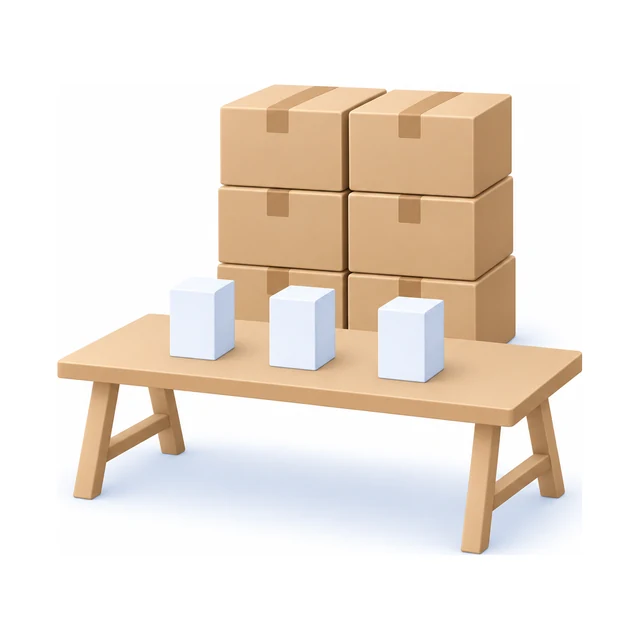
You could not bring everything, so you picked a subset. It is packed in cartons and stacked behind you. A few pieces of each line are out on the table where people can see them.
For the first hour this works beautifully.
Then a coach party arrives, or the evening crowd comes in after work, and there are eleven people at your table at once. Somebody is asking whether you have the blue one in large. Somebody else wants a bill. A third is asking for a discount because he is buying four. And every single thing you need to answer any of them is inside a sealed carton behind your knees.
An exhibition is your shop with the shelves taken away
This is what makes a stall different, and it is worth being precise about, because people assume an exhibition is just a busy day.
It is not a busy day. It is a different shop.
You cannot see your own stock. In your shop, inventory is visible. You know that shelf. You have walked past it four hundred times and you can tell at a glance whether there are three left or none. At a stall, ninety per cent of what you brought is inside cardboard, and the only way to know what is in there is to open it.
Nobody has worked here before. The stall is three days old. Whoever is helping you may be a relative, a temporary hand, or somebody's cousin who was free that week. They do not know your rates, your stock or your habits, and there is no time to teach them.
The customer does not come back tomorrow. In a shop, a customer who does not find what he wants returns on Saturday. At an exhibition he walks eight feet to the next stall, which sells something similar, and you never learn that you lost him.
And the whole thing is compressed. A year's worth of a small line can move in three days. Every weakness in how you run your counter shows up at once, under a queue, in front of strangers.
The four things that actually break
Ask anyone who has run a stall and the same four come back.
"Do you have it?" — and nobody can answer. The honest reply is "let me check", which means unpacking. Under a queue, what actually happens is a guess: yes, probably, let me see — and either you find it and the customer waited, or you do not and you have wasted his time and yours. Both cost the sale you could have been making instead.
The billing falls behind. You must give a bill. It is a legal obligation and it is also the only record you will have. But writing bills by hand at a stall in a rush is slow, and slow means the queue grows, and a growing queue means people leave. So the bills get shorter, then rougher, then somebody says "I'll write it after" — and nobody does.
The discounts have no logic. This one causes the most damage and gets the least attention. A customer buying four asks for something off. Under pressure, with a queue watching, the person at the table gives whatever feels reasonable. Twenty minutes later somebody else buys four of the same thing and gets a different number. On day three the first customer's neighbour mentions what he paid. Now you have a conversation you did not want, and you are the one who looks unfair — not because you were, but because nobody was following a rule.
And then you have to count. At nine in the evening, tired, in bad light, with the stall half packed, somebody has to work out what sold and what is left so you know what to bring tomorrow. This is when mistakes get made, and it is also the job everybody puts off until it is too late to be useful.
The idea underneath the fix: the stall is a place
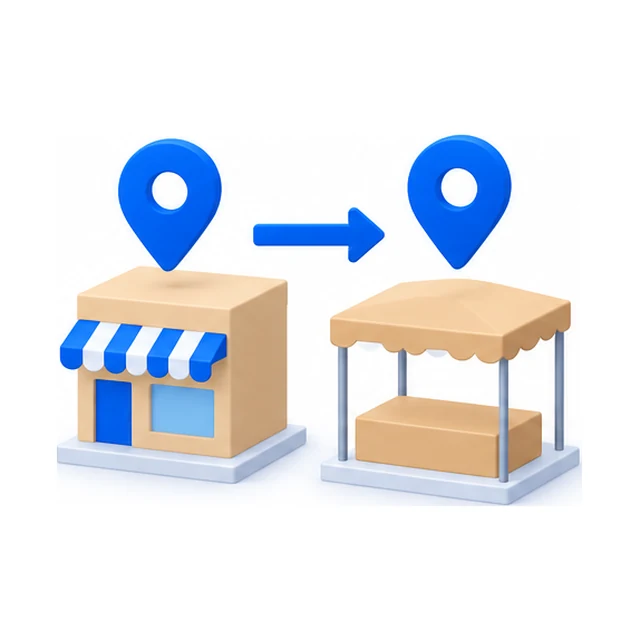
Everything that follows comes from one small change in how you think about it.
The exhibition is not a special mode of your shop. It is a location — as real as your main shop or your godown, just temporary.
So you create it: Pune Exhibition, October 2026. Then you transfer into it exactly what you packed. Forty of this, twelve of that, six of the other. The cartons that go into the vehicle and the stock that sits in that location are the same list, and both ends know it.
Once the stall is a location, everything else stops being a special case. Stock at the stall behaves like stock anywhere else. Sales from the stall are sales from a location. What comes home at the end is a transfer back. No separate register, no reconciliation afterwards, nothing to remember.
"Do you have the blue one in large?"

Now that question takes three seconds and a phone.
You are not looking at a list of what you own. You are looking at what is in that location, right now, after everything sold this morning. Forty came, thirty-one have gone, nine are left, and four of those are in the carton second from the top.
That changes what you can say. "Yes, I have nine" is a different sentence from "let me check" — and at a stall, where the customer is standing and deciding, it is often the whole sale.
It also changes what you can say when the answer is no. "That one has gone, but I have this" is a recovery. "Let me look" followed by five minutes of unpacking followed by no is a lost customer and a lost queue behind him.
Billing at the speed of the queue
Scan the item, take the payment, done. The barcode does the work the handwriting was doing, and the bill is correct because nobody typed it.
The bill can go to the customer on WhatsApp as it is made. At a stall this matters more than it does in a shop, for a reason worth spelling out: the customer is going to lose the paper. He is at an exhibition, carrying bags, and that slip is in a pocket with a parking receipt and a food coupon. When he comes back on day three wanting to exchange something, the bill on his phone is the difference between a pleasant two minutes and an argument neither of you enjoys.
It also means that every sale carries a phone number attached to what that person actually bought. Three weeks later, that is a list of people who have already paid you money for a known thing. That is worth considerably more than a stack of handwritten counterfoils.
Two people selling, one person collecting
There is a second shape this can take, and at a busy stall it is often the better one.
Your sales staff walk the stall with the mobile app instead of standing behind the table. When a customer decides, the person with him raises a quotation on the phone, then and there, with the right items and the right rates on it. He does not have to fight his way to the counter, and the customer does not have to stand in a queue to find out what he owes.
The owner sits at one point and collects. Each quotation comes up, the money is taken against it, and the quotation becomes the invoice — the same lines, the same rates, nothing retyped and nothing to reconcile afterwards.
That separation is worth more than it sounds. Selling and collecting are different jobs and they move at different speeds. When one person does both, the faster job waits for the slower one, which is the queue you were watching build. Three people selling into one collection point is a different stall from three people taking turns at one calculator.
It also gives you something on the evening of day one that is easy to overlook: the quotations that never became invoices. Those are the people who decided, heard the number, and walked away. How many there were, and on what, is a straight answer to a question most stalls never get to ask.
The discount problem, solved properly

This is where a system earns its place at a stall more than anywhere else.
The answer is not to refuse discounts — at an exhibition that costs you sales, and everybody knows the rates are negotiable. The answer is that the discount should come from a rule rather than from whoever happens to be holding the calculator.
Set the limits before you leave: what can be given per item, what can be given on a larger purchase, what needs a call to you. Then the person at the table is not deciding under pressure. They are applying something that was decided calmly, in advance, by you.
Three things follow. The customer gets a consistent number, so the day-three conversation does not happen. The helper is not carrying a judgement they are not equipped to make. And at the end you can see every discount that was given, by whom, on what — which tells you whether your limits were right before the next exhibition.
The screen and the catalogue
Two small things that do more than they sound like they should.
Put a screen up. A laptop connected to a television, showing what is available. People read it while they are waiting, which means they arrive at your table already knowing what they want, and the queue moves faster because half the questions have been answered before they are asked.
Put a catalogue behind a QR code. A list of what you have brought, with rates, as a file people can take away. Stick the code on the table and on the banner. The person who was interested but did not buy now has your range in his phone — and, crucially, so does the person who walked past while you were serving somebody else. At an exhibition you lose far more customers to being busy than to being expensive.
What the evening tells you

At the end of the day you have not spent an hour counting, because the counting happened as the selling did. But that is the smaller half of it.
The bigger half is what you can now see. Which lines went first and were gone by noon. Which sat on the table for three days and came home. What sold together — the thing people picked up alongside the thing they came for. How the afternoon compared with the evening, so you know when to have a second person at the table next time.
An exhibition is one of the rare occasions when a lot of strangers, with no loyalty to you and no habits about your shop, tell you what they actually want by paying for it. That information is worth having and it is easy to lose.
Day two starts already counted
The practical outcome: you arrive on the second morning knowing exactly what is in each carton, because nobody has to open anything to find out.
If the evening showed that a line sold out by two o'clock, you know to bring more of it tomorrow — and because the stall is a location, sending more is a transfer, not a negotiation with your own records.
And when it is over, the stock that did not sell transfers back. The exhibition closes, the numbers land in the right place, and nothing is left hanging for somebody to sort out next week.
One honest warning about the venue
Exhibition halls have bad mobile data. Hundreds of people are standing in a shed on the same cell tower, and the connection that worked when you set up at ten in the morning may be unusable at seven in the evening — which is exactly when your queue is longest.
So plan for it. Billing at a stall should keep working when the connection does not, and sync when it comes back. If anyone tells you this does not matter, they have not sold anything at a mela on a Saturday evening.
This is one of the clearest cases for thinking carefully about offline and cloud before you go, rather than finding out at the venue.
The short version
- Make the exhibition a location and transfer into it what you packed.
- Answer "do you have it" from a phone in three seconds, not from a carton.
- Scan and bill; send it on WhatsApp so the customer still has it on day three.
- Let staff raise quotations on the phone and collect against them at one point, so selling does not wait for collecting.
- Decide discount limits before you leave, so nobody decides them in a queue.
- Put a screen up and a QR catalogue out; you lose more customers to being busy than to being expensive.
- Let the evening tell you what sold, and start day two already counted.
- Assume the network will fail at the worst hour, and be ready for it.
We have built this for customers running seasonal exhibitions, including a Diwali crackers mela where a year's selling happens in a handful of days — that one is written up among our case studies. If you have a stall coming up, it is worth setting up before you pack rather than after the first difficult evening.